Campaigns I killed — and the one I didn’t catch.
A portfolio shows you what a creative director made. It doesn't show you what they stopped. These are four decisions that never became case studies: a radio buy I pulled while it was working, a billboard taken off a wall, a market I entered too fast, and a typo that reached print. Three were calls. One was a mistake.
Why would you kill a campaign that's already working?
Because "working" is measured on the media plan, and the cost is often charged somewhere else. A buy can hit every number it was bought against and still be spending something the spreadsheet doesn't track — an ambassador's credibility, a customer's benefit of the doubt, the willingness of an audience to hear you again next quarter.
Most campaigns are killed for the obvious reason: they aren't performing. Those decisions are easy and nobody remembers them. The decisions worth writing down are the other kind — where the numbers say continue and you stop anyway, because you can see what continuing will cost eighteen months out.
What follows is four of mine. Three are calls I made. One is a mistake I own. I've included the mistake because a page of only good decisions isn't a record, it's a brochure.
When should you pull an ad that's performing?
When the audience starts telling you what the placement is costing, and the placement is the only thing you'd have to give up to keep them.
We tested Betty White on talk radio. The buy performed. It also drew hate calls — and, more importantly, calls from her own audience. People who had trusted her for decades rang our company directly to say they couldn't believe she would let her voice run in a commercial that put money into that show. They weren't offended customers. They were watchdogs, and they were watching her, not us.

I pulled her from the buy. Not because the calls were loud, but because of what the calls were about. An ambassador's trust is a finite asset you are renting, and every placement either compounds it or draws it down. That buy was drawing it down at a rate no media efficiency could justify. We ran the Betty White campaigns for a decade, and that run lasted because we protected the asset in moments like this one.
The general rule I took from it: performance is not permission. If a placement is profitable and off-brand for the person carrying it, you are converting long-term equity into short-term response at a terrible exchange rate.
What do you do when your billboard gets taken down?
Find out who took it down and why — and then find out whether it has to stay down. Most people treat a pulled ad as a verdict. Usually it's a conversation nobody has had yet.
In the mid-nineties I built work for what was then called viatical settlement: buying life insurance policies from people who were terminally ill, so they could have the money while they were alive to use it. The creative had been running in the gay and lesbian press first. Moving it onto a billboard in Fort Lauderdale was a channel decision — taking work the community press would carry and asking a national outdoor company to carry it too. A 1995 law review records it as the first billboard for a viatical settlement company.
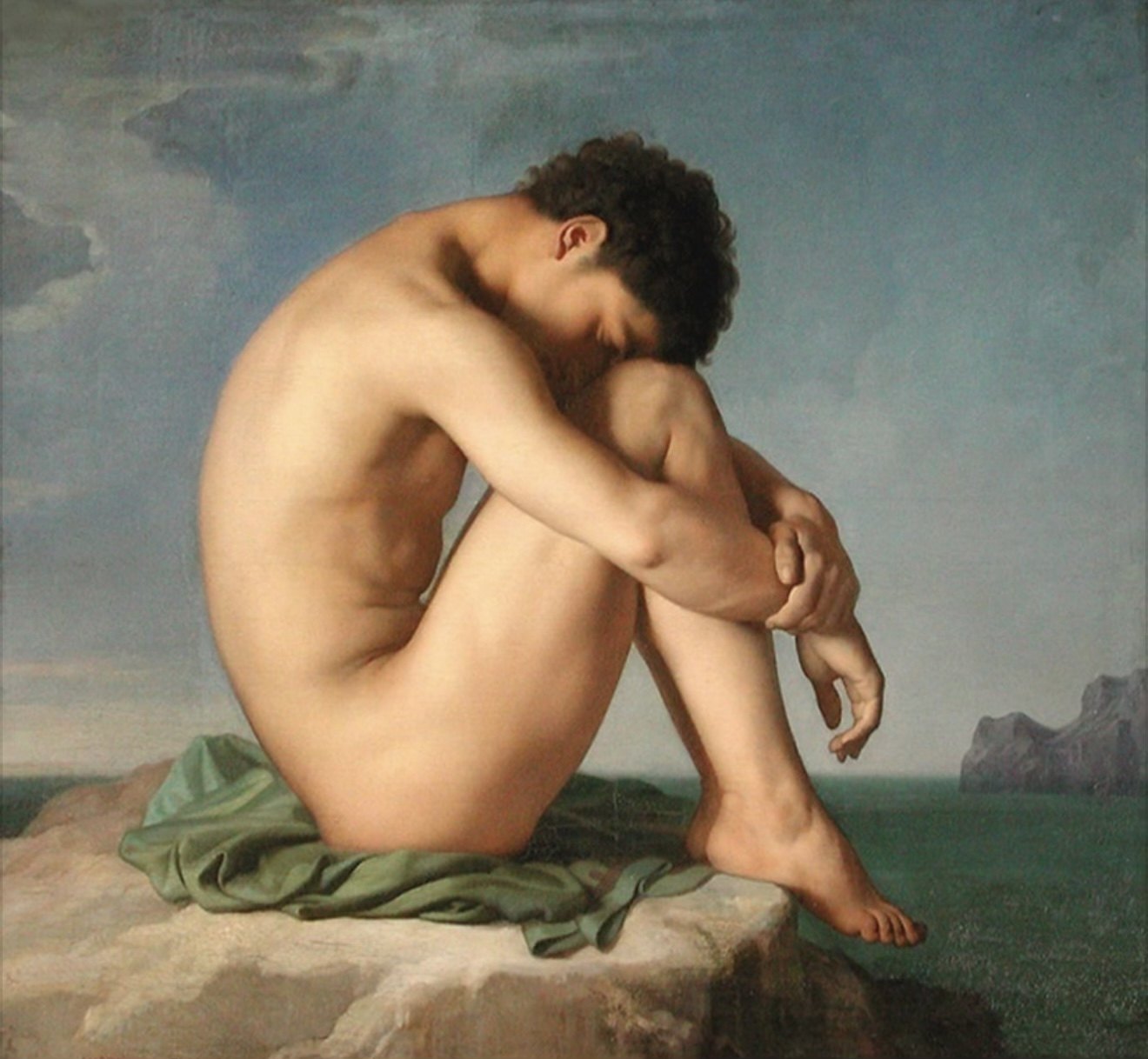
The board paired Flandrin’s painting, an image that audience had known for most of a century, with four words: terminally ill… there are options. The owner of the sports bar beneath it objected to the nude figure, and the outdoor company took it down six days into a sixty-day contract. It went back up the next day, after our attorney made a call and someone sat with the owner and explained what the advertising was for.
What the episode didn’t do was sell. Publicity is not distribution, and being talked about is not the same as being chosen. The full story — the six days, the rules I kept afterwards and what the rest of the category was doing — is in To Get Their Attention, Rent a Billboard.
Should you kill the campaign or kill the channel?
If the work is right and the environment keeps putting it at risk, change the environment. Most people do the reverse — they keep the channel, sand the edges off the creative, and end up with something nobody objects to and nobody remembers.
We won Fort Lauderdale. But winning it showed me the flaw I couldn't engineer around: every board sits on somebody else's property, and that somebody can object to your message after you have paid for it. We got that one back because we had an attorney and the outdoor company was willing to go explain. That is not a plan. That is a good outcome you can't repeat on schedule.
So the money went back to print, where there is no landlord. The magazines serving that audience were read by exactly the people the campaign was for, and no third party in between could pull the page. In those years those publications were also one of the few reliable places to read about emerging HIV therapies — this was before protease inhibitors existed, and advertising is what kept those pages printing. I have never been more comfortable with where a media budget went.
It also moved the work inside. The same creative ran as free rack cards, distributed through an indoor network into the bars, clubs and restaurants the audience was already in — ten markets, from New York and Boston to Chicago, Dallas, Seattle, Los Angeles and San Francisco. On a billboard the message was a guest on somebody else's wall. On a rack by the door it was a guest in the room, which is a different relationship entirely.
Killing a channel looks like retreat for about a sentence. Then it looks like what it was: the same campaign, in a place where nobody else got a vote.
How do you know you've entered the wrong market?
Usually about three weeks after you enter it, and about six months after you should have checked.
In the spring of 2020 I set up a television spot test in West Palm Beach. Two large competitors were already there, deep into the insurance-broker channel, and doing well. The territory was covered — arguably too well. I killed the test.
Killing it was correct and it was also not the decision that mattered. The decision that mattered happened earlier, when I bought a market without measuring who already owned the channel inside it. I jumped when I should have paused.
What I do differently now: before any geographic test, I want to know who is already working the same distribution channel in that market and how long they've been there. A market with two entrenched competitors in one channel isn't a market you enter with a spot test. It's a market you enter through a different channel, or you don't enter at all.
What does one word actually cost?
A full print run, the credibility of everyone who handed it out, and the argument you were making about how careful you are.
This one isn't restraint. It's a mistake, and it belongs on the page for that reason.
We produced a large run of brochures aimed at Latin American investors, distributed through financial agents. The piece was translated into Spanish, and my assistant and I proofed it. There was a typo in the headline on the front cover. To a Spanish-speaking investor it was glaringly obvious — the kind of error that answers the question "how much attention will these people pay to my money" before a single page is turned.
Two rules came out of it, and I have never broken either one:
- Never sign off on a language you don't speak. A native speaker approves it in writing, and that approval is a deliverable with a name attached, not a favor from someone in the office.
- Proof the headline separately, and last. Everyone reads body copy carefully and skims display type. Typos don't survive in the places people are looking. They survive in the biggest words on the page.
Waiting on budgeted money burns you. So does spending it in a hurry. This one was the second kind.
So how do you actually decide when to kill something?
Four questions, in this order. They take about ten minutes and they are almost never asked, because by the time work is running, everyone in the room is invested in it continuing.
- What is this costing that we aren't measuring? Equity, goodwill, an ambassador's standing, the audience's patience. If you can't name it, look harder — it's rarely nothing.
- If the number is good, do we know why? A campaign that performs for reasons you can't explain is a campaign you can't repeat and can't defend.
- Is the problem the work, the channel, or the market? Three different diagnoses, three different kills. Most teams only know how to change the work.
- What would we need to believe for this to still be right in a year? Say it out loud. If nobody can say it without hedging, you already have your answer.
- And before another dollar: what are you running that you'd have trouble stopping? Not because it's working — because someone senior championed it, because the contract has months left, because stopping it would mean admitting something. That is usually where the money is going.
The structural problem is that nobody's job description includes stopping things. Someone has to own the question, and it should be a person with no stake in the answer.
That is also why this page exists. Anyone can show finished work; what you are hiring is judgment — what someone will stop, what they'll refuse, and what they'll tell you when the number looks good and the decision is still wrong. None of the four stories above ended the way I wanted. Two I'd make again tomorrow, one I'd make earlier, and one I'd have caught with a phone call.
Nothing on this page rests on my memory alone. The Fort Lauderdale campaign is documented in the contemporaneous trade and community press, and one of the cards survives in a collector's catalogue. Where the record and my memory disagreed, I changed the page.
- Christy Fisher, Local Print Bumps Into National Ad Walls, Advertising Age, May 30, 1994, at 2.Cited for viatical advertising in the gay and lesbian press.
- Robert McCabe, Billboard Aimed At Terminally Ill, Sun-Sentinel (Fort Lauderdale), October 1994.Local coverage of the complaint and the removal.
- Intrator, comment on viatical settlements, University of Miami Business Law Review, vol. 5, p. 231 (1995), n. 12.Records the Fort Lauderdale board as the first billboard for a viatical settlement company, citing the Sun-Sentinel.
- Florida billboard flap settled, Southern Voice, November 3, 1994, at 4.Reports the board restored on October 5, one day after it came down. Runs with a photograph of the billboard.
- Page & Associates Inc., Fort Lauderdale — 1996 rack card, series C.Catalogued at lastdodo.de. Indoor free-postcard distribution across ten U.S. markets.
- Hippolyte Flandrin, Study (Young Male Nude Seated Beside the Sea), 1835–36, Musée du Louvre.The painting used in the campaign creative.
If something you're running should probably stop, that's a conversation worth having early.
I'm usually brought in to start things. The more valuable half of the work is knowing what to end — a channel, a market, a partnership, a campaign everyone is too invested in to question. If you have one of those running right now, that's the place to begin.