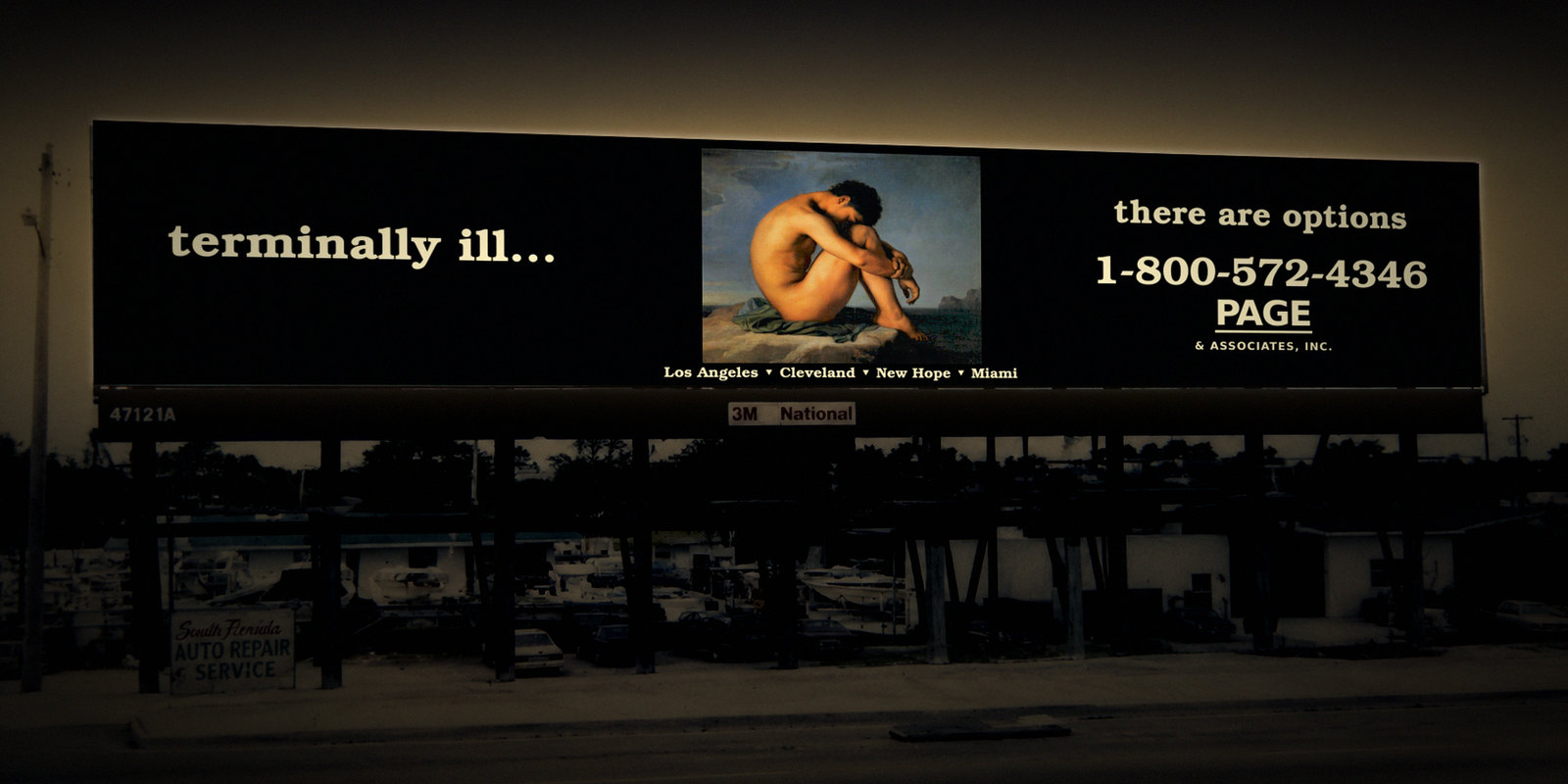
In October 1994, a billboard went up over a sports bar in Fort Lauderdale. The image was a nude — Hippolyte Flandrin’s 1836 painting of a young man sitting by the sea, curled into himself, one of the most recognized images in gay life for most of a century. The copy was four words, split by the painting: terminally ill… there are options. Under it, a phone number and a name.
Six days into a sixty-day contract, it came down.
One day after that, it went back up.
That was the campaign. Not the sixty days. The six.
The board was the escalation, not the opening
The work didn’t start outdoors. The same ad had already run in periodicals serving the gay and lesbian community. Print was the first move, and print did what print does: it reached the people already looking.
The problem wasn’t reach. The problem was that a man dying of AIDS in 1994 had a financial option nobody had told him existed, and the people who most needed to hear it were not reading trade press about insurance. They were walking past. They were in a car. They were living a life that had gotten very small and very fast.
Print asks to be picked up. A billboard doesn’t ask.
So we rented one, from 3M, on a road those men actually drove. Advertising Age reported it that year. As far as the documented record goes, it was the first billboard ever placed for a viatical settlement company. Not a claim. A citation.
What you’re actually buying
A billboard is a bad media buy by every metric a modern marketer is trained to respect. You can’t target it. You can’t retarget it. You can’t A/B the headline on Tuesday and roll the winner on Wednesday. There is no dashboard.
What you’re buying is three things digital can’t sell you.
It cannot be skipped. No scroll, no pre-roll counter, no ad block. It’s forty feet of unavoidable in a world engineered around avoidance.
It is a commitment device. You have to decide what you believe before the vinyl gets printed. There is no hedging at that size. Every weak line I have ever written died the moment I imagined it at forty feet.
It creates a public argument. This is the part most people miss, and it is the whole point.
The six days
The bar owner below the board complained. His objection, as he gave it to the Sun-Sentinel, was the naked man — the message was one thing, the nudity was tasteless. He took it to the billboard company. The company pulled it.
We called a lawyer. The board went back up the next day, October 5th, after a 3M representative sat down with the man and explained what the ad was actually for. The company’s spokesperson said he hadn’t fully understood it until that meeting. Once he did, he agreed to put it back. Southern Voice ran the whole thing on page four that November under the headline “Florida billboard flap settled,” with a photograph of the board.
Count what happened in those six days.
A billboard on one road became a story in a regional daily and a story in the community press. A man who wanted it gone ended up in a conversation that changed his mind. And an audience of thousands who never drove that road learned there was such a thing as an option.
We paid for a location. We got a public argument, and the argument was better distribution than the location.
That’s spectacle. Not the size of the thing. The reaction it earns and what the reaction carries.
The painting, the copy, and the press record are all on the Campaigns I Killed page, alongside the campaigns that didn’t deserve to stay up.
The rules I’ve kept since
Spectacle is the most misused word in this business. Everyone thinks it means big. It means consequential. Here’s what I’ve held onto for thirty years.
Earn the right before you take the space. The board worked because the print work came first. We knew the audience recognized that painting. We knew the words landed. We escalated a proven message. Escalating an unproven one is just an expensive way to find out you were wrong, in public, at scale.
Make the creative do the arguing. Four words. One painting. A phone number. Nothing explained. A man who saw that image knew immediately who it was for, because he’d seen it his whole life — on book covers, on playbills, on clinic walls. That’s what a symbol is. It carries the sentence you don’t have room to write.
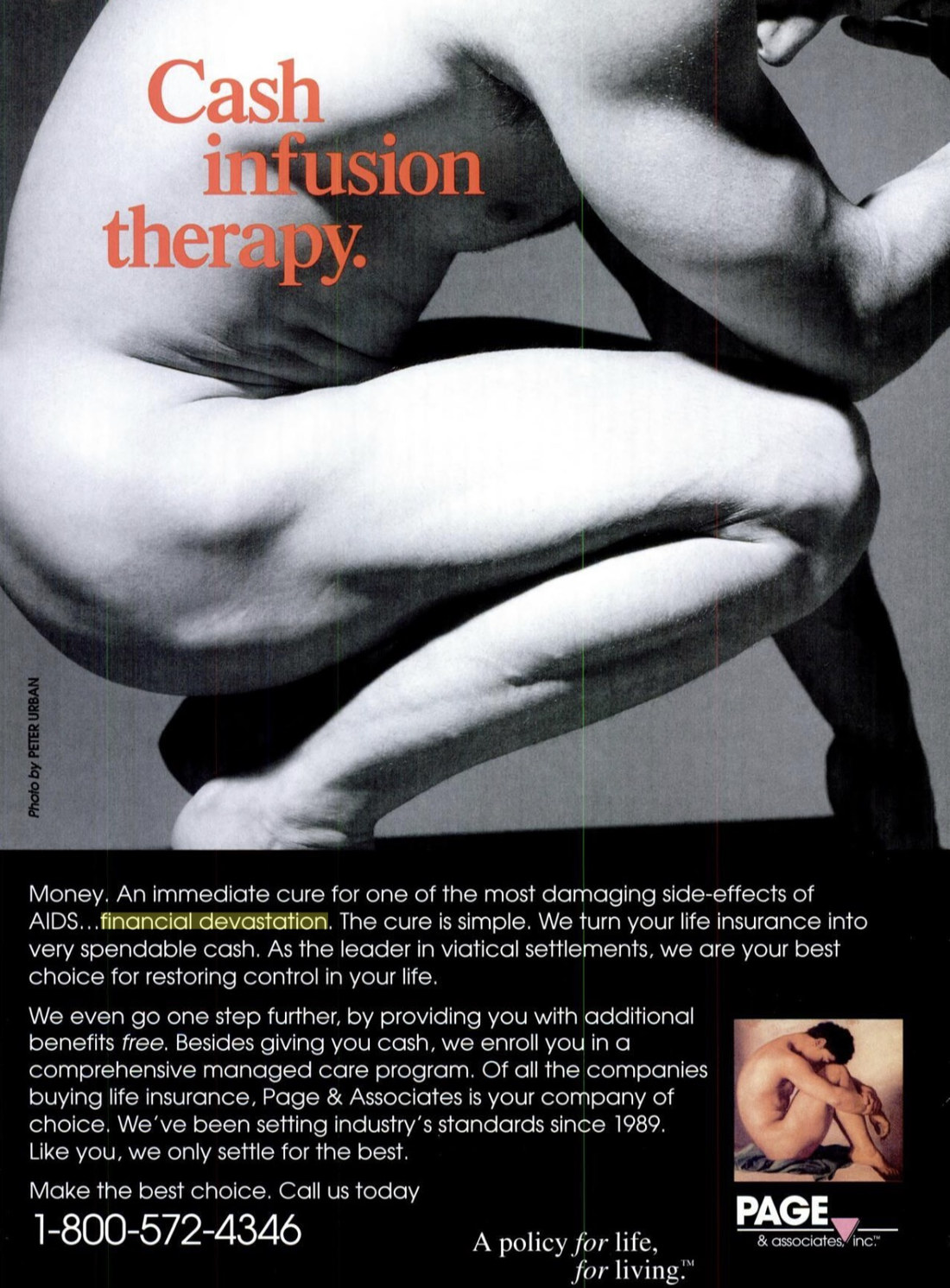
Two years on, the campaign modernized and the painting stayed. A 1996 print execution ran a full-bleed contemporary photograph, an oversized red headline — Cash infusion therapy. — and a black field of body copy that did the explaining the board had no room for. The Flandrin was still there, shrunk to a stamp beside the logo. That is what a symbol earns: once the audience knows it, it no longer has to be the loudest thing on the page. It only has to be present.
The lesson runs the other way too. The board could be four words because the painting carried the rest. The print ad could be four paragraphs because the painting had already said who it was for. Same device, two jobs, depending on how much time the reader was going to give it.
Be ready to defend it in daylight. You will get a phone call. Somebody will want it gone. Know what you’ll say, know who you’ll call, and know the difference between a real objection and discomfort. Ours came down in a day and went back up in a day because we had a lawyer’s number and a defensible position. If you can’t defend it, don’t hang it.
Know when to pull it. This is the other half. I once bought Betty White onto talk radio because the buy performed. It performed and it was wrong. Her own audience called the company saying they couldn’t believe she’d lend her voice to that show. I pulled her. Performance is not permission. An ambassador’s trust is a rented asset, and you can spend it faster than you can earn it.
What everyone else in the category was doing
It helps to know what the pages looked like. Viatical advertising was one of the industries keeping gay magazines solvent in those years — alongside the bars early on and the drug companies later — and almost all of it converged on the same picture: a white man, fit, often shirtless, looking entirely well. Bodybuilders. Sunsets. Park benches. Beaches at dusk with a line about distant lands and time to enjoy them.
Read them together and the strategy is obvious and cowardly. The category was selling a product you only bought because you were dying, and it was illustrating that product with pictures of people who looked like they never would. The imagery was there to make the advertiser comfortable, not the reader.
A man reading those pages knew exactly what he looked like. He did not look like the ad.
That is the gap the Flandrin walked into. A body curled in on itself, face hidden, at the edge of the water. Not well, not brave, not lit like a vitamin commercial. It is the only image in the category that looks the way the reader felt, and it was painted in 1836 by a man who had never heard of any of this. That is why it worked at forty feet and why it still worked shrunk to a stamp two years later.
There is a postscript I did not expect. In 2018, writing in The Atlantic about the whole viatical industry and the magazines it bankrolled, Jack Lowery reached for one ad to characterize how these settlements were sold: a 1996 Advocate ad pitching them as cash infusion therapy, a cure for the financial devastation of AIDS. That ad is mine. Twenty-two years on, out of a decade of the category, the line that got quoted was the one written to interrupt.
Which is the argument of this whole piece, made by someone who has no stake in it. Spectacle is not what makes an ad loud. It is what makes it the one that gets remembered when someone finally writes the history.
The billboard isn’t the billboard
I’m not telling you to buy outdoor. I’m telling you the billboard is a shape of thinking that most brands have stopped doing.
It’s the ad that runs once, in one place, and gets talked about for a month.It’s the physical object mailed to two hundred people who matter instead of the email blasted to two hundred thousand who don’t.It’s the film nobody asked for.It’s the sentence on your homepage that a cautious client would have you soften.
Anything that cannot be optimized, cannot be undone quietly, and cannot be ignored.
Attention is the only asset that has actually gotten scarcer in my career, and every tool built to capture it has made it cheaper to fake and harder to keep. The way through is not more frequency. It’s fewer, larger, riskier acts of conviction.
Rent the billboard.
Then be prepared to stand under it when someone asks you to take it down.
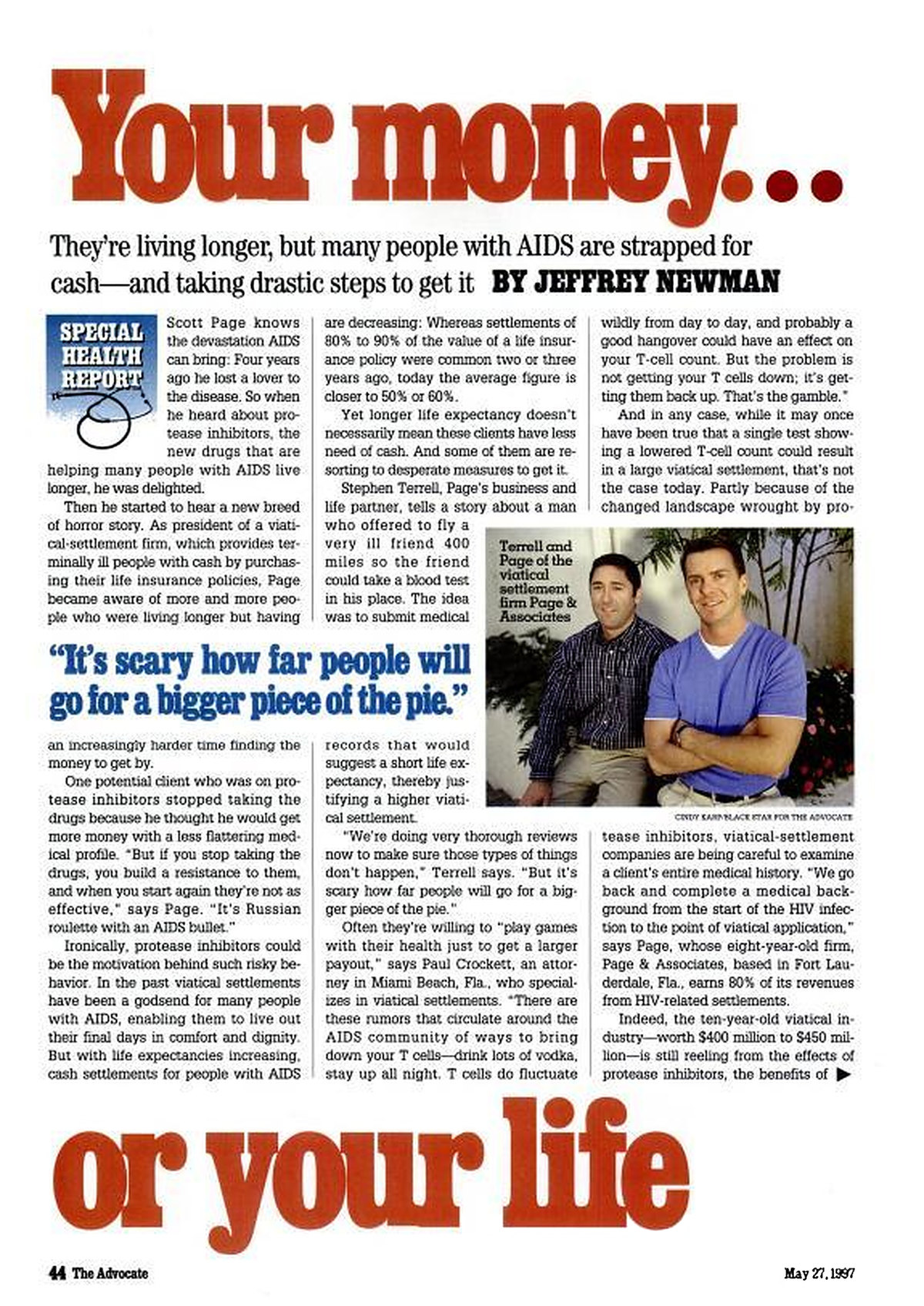
The 1994 Fort Lauderdale campaign is documented in Advertising Age (May 30, 1994), the Sun-Sentinel (October 1994), and Southern Voice (November 3, 1994, p. 4). Where the record and my memory disagreed, I changed the story. My own place at Page & Associates is on the record too: The Advocate, May 27, 1997, “Your Money… or Your Life,” pp. 44–49, where I’m quoted on how the firm reviewed the medical files behind every settlement. The 1996 print execution ran in The Advocate, June 25, 1996 and July 9, 1996; photograph by Peter Urban. That execution is quoted in Jack Lowery, “The Gay Men Who Have Lived for Years With Someone Waiting on Their Death,” The Atlantic, October 4, 2018, which does not name the advertiser.
What was the first billboard for a viatical settlement company?
A 1994 board in Fort Lauderdale for Page & Associates, a Cleveland-based company, on a 3M National face. Advertising Age reported it on May 30, 1994. The same ad had already run in gay and lesbian community periodicals; the billboard was the escalation.
What did the billboard say?
On a black face: terminally ill… on the left, there are options on the right, with a 1-800 number and the Page & Associates name beneath it. Between the two halves sat Hippolyte Flandrin’s 1836 painting Young Man Sitting by the Seashore, a public-domain work that had been an icon in gay life for most of the twentieth century.
Why was the billboard taken down?
The owner of the sports bar beneath it complained to 3M about the nude image, telling the Sun-Sentinel the message was one thing but the naked man was tasteless. 3M removed it six days into a sixty-day contract.
How did it go back up?
The company’s attorney was consulted and the board was restored on October 5, 1994, one day after removal. A 3M representative met with the bar owner, who by 3M’s account had not fully understood what the ad was for; once he did, he agreed to let it go back up. Southern Voice reported the settlement on November 3, 1994.
What does “rent a billboard” mean for a brand today?
It means choosing a move that cannot be optimized, undone quietly, or ignored: one ad in one place, a physical object sent to a short list, a homepage line a cautious client would soften. Fewer, larger, riskier acts of conviction rather than more frequency.
When should a brand pull a spectacle instead of defending it?
When it spends trust the brand doesn’t own. A Betty White radio buy on a talk show performed on the numbers but drew calls from her own audience, and it was pulled. Performance is not permission; an ambassador’s trust is a rented asset.
What did viatical settlement advertising look like in the 1990s?
It converged on one picture: white men, fit and often shirtless, looking healthy — bodybuilders, beaches, sunsets, park benches — selling a product people only bought because they were dying. The 1994 Page & Associates billboard broke from that by using Hippolyte Flandrin's 1836 painting of a man curled in on himself, an image that looked the way the reader actually felt.